


Introduction
Connor, a 20-year-old college student, transformed his life through Anxiety Institute’s Summer Intensive Outpatient Program (IOP). After social anxiety and generalized anxiety disorder forced him to take a leave of absence from college, Connor used the summer to build confidence, increase independence, and develop practical skills for managing anxiety. By the fall, he successfully returned to college and resumed campus life with greater confidence and resilience.
Reflecting on his progress, Connor shared…
“I feel like I’ve been able to be more independent. I’m able to initiate conversations, be in public places by myself, and I have better control over my rumination.”

Background
Social Anxiety, Avoidance, and School Withdrawal
Connor’s anxiety gradually expanded from discomfort in social situations to avoidance of classes, dining halls, public places, and interactions with peers. He relied heavily on safety behaviors, avoided unfamiliar situations, and spent significant time replaying conversations and worrying about how others perceived him.
By the spring semester, his anxiety had become so severe that he took a leave of absence from college. Seeking support before returning to school in the fall, Connor enrolled in Anxiety Institute’s Summer Intensive Outpatient Program.
Anxiety Institute’s Approach
Connor’s treatment team recommended Anxiety Institute’s Intensive Outpatient Program, providing a structured and supportive environment to address social anxiety and avoidance. His program included daily therapy, exposure coaching, group therapy, wellness activities, and family involvement.
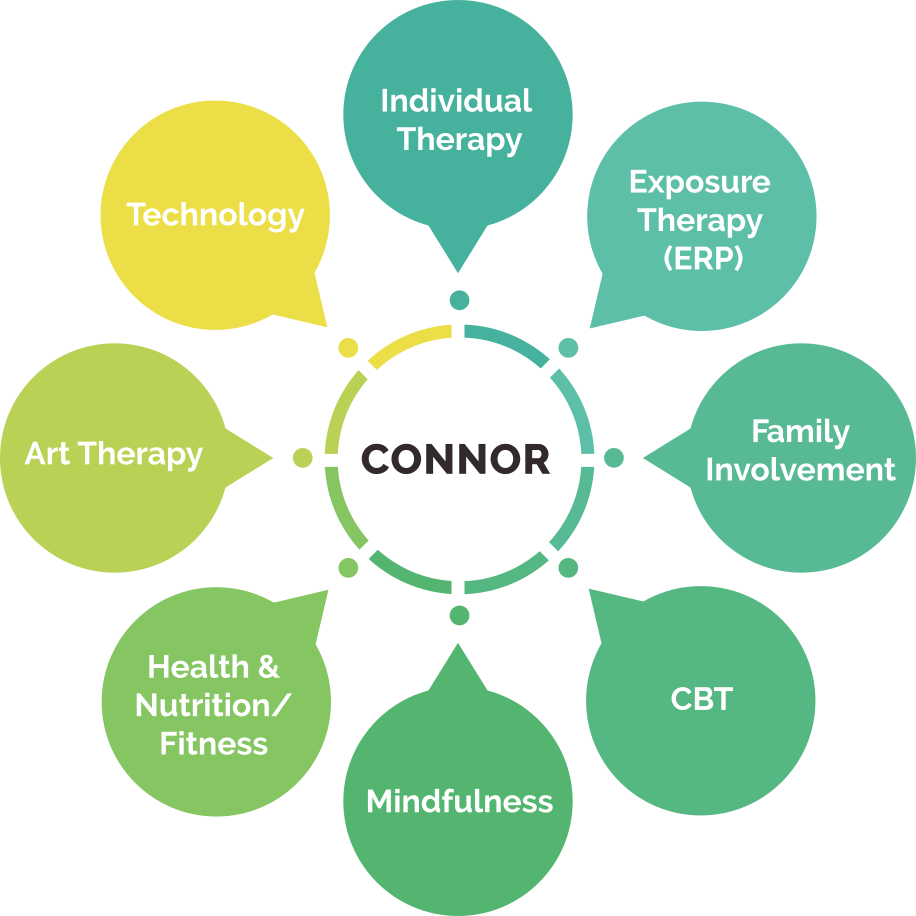
Exposure Response Prevention (ERP): Connor gradually faced feared situations, including initiating conversations, making phone calls, navigating public places independently, and interacting with strangers. Learn more about ERP.
Cognitive Behavioral Therapy (CBT): Connor learned to identify and challenge self-critical thoughts and cognitive distortions related to social judgment. Learn more about Cognitive behavioral therapy (CBT).
Acceptance and Commitment Therapy (ACT): Connor developed mindfulness skills and learned to tolerate anxiety while pursuing meaningful goals. Learn more about ACT
Family Support and Education: Connor’s family received guidance on reducing accommodations and supporting his growing independence.
Transformative Results
Throughout treatment, Connor steadily increased his willingness to engage in situations that once felt impossible.
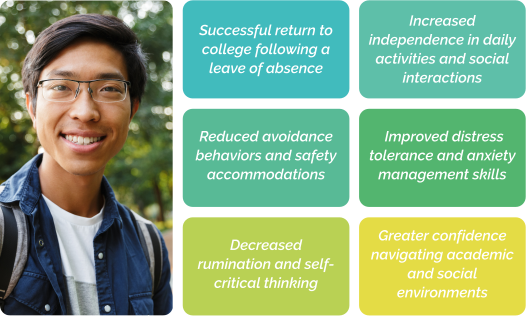
By the end of the summer, he was independently attending appointments, making phone calls, ordering food, navigating public spaces, and managing social interactions with greater confidence. He also completed a college course and maintained a customer-facing job, where he regularly interacted with customers and answered phone calls. Most importantly, Connor successfully returned to college in the fall, equipped with increased skills and a comprehensive support plan.
His clinical team observed significant improvements across multiple areas — independence, social engagement, distress tolerance, and overall functioning — enabling him to thrive.
Measurable Results
Connor’s Measurement-Based Outcomes at Discharge:
Learn More
Early, specialized intervention can transform outcomes for adolescents struggling with anxiety and OCD.
To learn more about our Intensive Outpatient Program or therapy approaches, please contact Anxiety Institute to schedule a consultation.
About this case study
The client’s name, photo, and identifying features have been changed to protect confidentiality.
Clinically reviewed by Dina Nunziato, PhD, Chief Clinical Officer